Our History
The Arkansas Symphony Orchestra celebrates its 42nd season in 2007-2008, but the presence of an orchestra existed long before the Symphony's incorporation in 1966. In 1821, the first formal concert took place at Arkansas Post. Through the years, many music lovers made several attempts to form a professional orchestra. In 1927, Ms. Stella Boyle Smith opened her own home for a group of musicians to practice with the hope of creating a symphony for Arkansas.
Establishing the Arkansas Symphony Orchestra was a difficult task. Upon incorporation in 1966, one local bank held the new organization responsible for the debts of past attempts. Ten orchestra members committed to success personally assumed the $6,000 debt so that the incorporation could proceed. Many symphony supporters gave of their time, money, and effort for the incorporation of the Arkansas Symphony Orchestra in 1966, and more than 40 years later, many music lovers across the state continue to give of their time, money, and effort in support of the Symphony.
The first conductor of the Arkansas Symphony Orchestra was Vasilios Priakos. Priakos had vast experience in conducting symphony orchestras in New Jersey, Oklahoma, and Florida. In 1968, Glen Owens was hired as conductor and business manager of the Symphony. Owens sought to establish financial security by gaining a $10,000 matching grant from the National Endowment of the Arts and the Arkansas Arts Humanities Council. The grant, along with generous contributions from symphony supporters, allowed the symphony to retire all outstanding debts and become financially stable for the first time in its existence, which was an amazing feat for such a young organization.
Dr. Francis McBeth became the third music director and conductor of the Symphony in 1970. During his first season, the Symphony performed only six concerts. The number of concerts rose to seventeen in 1973, and attendance grew from 600 to almost 7,000. The following year the symphony audience grew to 28,000. One of the most important programs McBeth initiated to increase the Symphony audience was the pre-performance talks, which is known today as "Concert Conversations." The 1972-1973 season opened to a standing-room-only crowd, and the box office could only guarantee seats for season ticket holders, IF they arrived early. The April concert of 1973 marked the first time the Symphony held a concert at Robinson Center Music Hall.
During that same month, the Symphony began to grow under new conductor, Kurt Klippstatter's direction. During his tenure, the Symphony experienced many firsts such as beginning the tradition of opening each season with the performance of the National Anthem, and the selling of champagne during intermission. In another "first" for the Symphony, B.D. Ford, of Bean Music Company, raffled off a television set during a concert in order to increase audience attendance. The Symphony also began to travel outside of central Arkansas to create more coverage of the Symphony to all parts of the state. Statewide exposure increased in 1974 when AETN broadcast a full rehearsal on the public network television station. In 1976, the Symphony received national attention when they performed at the John F. Kennedy Center for the Performing Arts in conjunction with the Bicentennial program celebration. Also, the 1977-1978 season opened with a live performance from Robinson telecast on KATV, Channel 7.
Robert Henderson began the 1981-1982 season as conductor of the Arkansas Symphony Orchestra. Henderson hoped to improve the quality of performance for the Arkansas Symphony Orchestra. Through Henderson's eleven years as conductor, the Symphony emerged as one of the state's premier cultural entities. The transition from a community orchestra to a professional one produced consistent musical growth and allowed the Symphony to expand in performance, outreach, and educational arenas.
Due to Henderson's resignation, the 1991 -1992 season found the orchestra beginning the search for another music director. After receiving 231 applications, the Search Committee narrowed the field down to 5 finalists, eventually selecting David Itkin as the new conductor of the Arkansas Symphony Orchestra. Itkin established the goal of expanding the Symphony's audience by making performances more casual. This was established by creating "Blue Jean Night at the Symphony" where David Itkin and guest artist Jeffrey Solow wore jeans during the concert. The "Happy Hour" concert also contributed to more informal concerts, along with the "Classics Go Pop" concert that added a name that tune section to encourage audience participation.
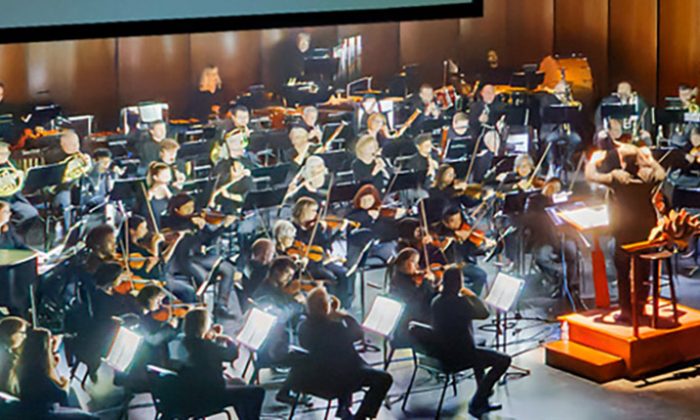
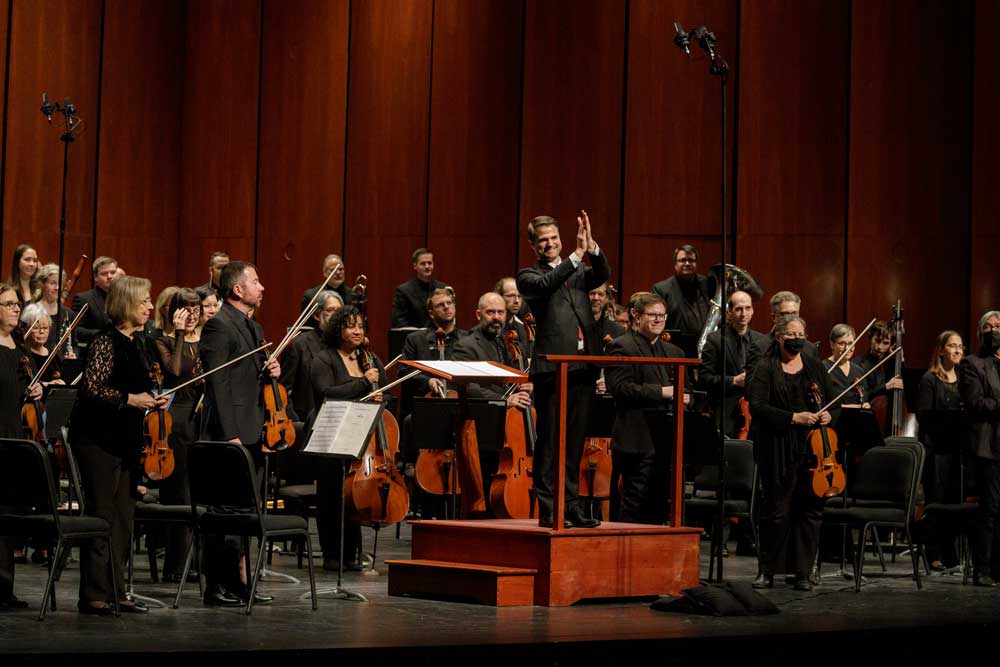
Now in its 42nd season, the Arkansas Symphony Orchestra performs more than thirty concerts at Robinson Center Music Hall each year, including all concerts within the Stella Boyle Smith Masterworks Series, the ACXIOM Pops LIVE! Series, the River Rhapsodies Chamber Series, and numerous special events including The Masters and ACXIOM SuperPops. Intricate to the ASO's activities are its resident ensembles, the Quapaw Quartet, the Rockefeller Quartet, the Sturgis Quartet, the ASO Arts Partners and the Arkansas Symphony Youth Orchestras.
With a budget of $3.5 million, the Arkansas Symphony Orchestra boasts an impressive list of distinguished guest artists such as The Four Tops, Maya Angelou, Michael Bolton, Van Cliburn, President Bill Clinton, Alicia DeLarrocha, Mignon Dunn, Danny Glover, Marilyn Horne, Al Jarreau, James Earl Jones, Yo-Yo Ma, Martina McBride, Maureen McGovern, Liza Minnelli, Olivia Newton-John, Doc Severinsen, Andre Watts, Mary Wilson, Ann Hampton Callaway, José Feliciano, Matt Haimovitz, Dame Kiri Te Kanawa, Kenny Loggins, Natalie Cole, LeAnn Rimes, Aretha Franklin, Marvin Hamlisch, Lucie Arnaz, Robert Klein, Michael McDonald, Lidna Ronstadt, Nadja Salerno-Sonnenberg, Mark O'Connor and Sir James Galway. Comprised of the state's most sought after professional musicians, the Arkansas Symphony Orchestra is heard by more than 250,000 Arkansans each year.